
The History of Printing and Publishing: From Ancient Scrolls to Digital Revolution
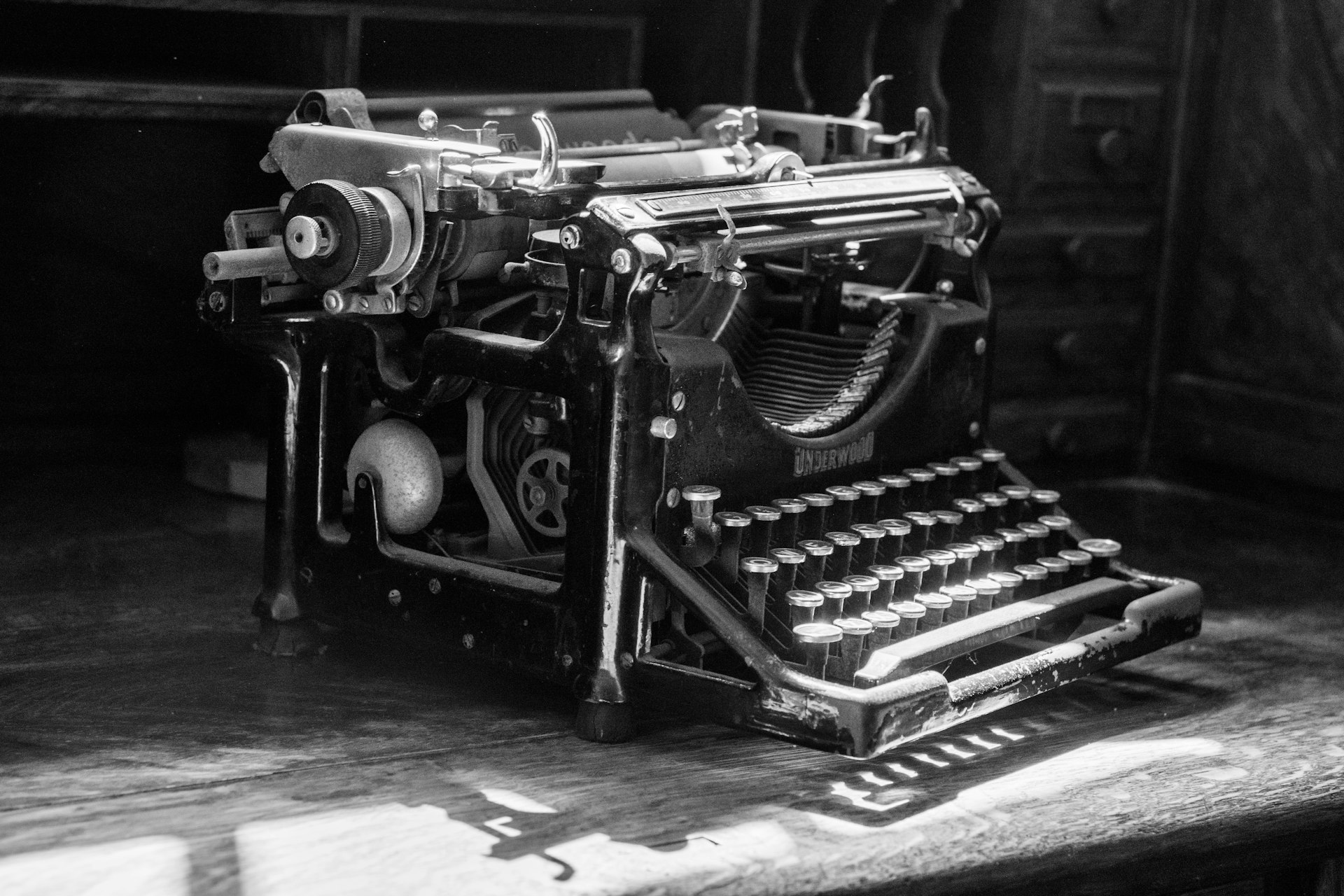

Photo by Richard Bell on Unsplash
Ancient Origins of Printing
Printing traces its roots to ancient civilizations, emerging as early as the 4th millennium BCE with cylinder seals used by Proto-Elamite and Sumerian cultures to certify documents. [6] These early methods involved stamping clay tablets, laying the groundwork for reproducible text. By 868 AD, China produced the Diamond Sutra, recognized as the world’s oldest known printed book-a seven-page scroll created using woodblock printing on paper. [1] This technique allowed for multiple identical copies, revolutionizing the spread of Buddhist texts. Woodblock printing dominated in East Asia during the 11th century, where Chinese and Korean innovators experimented with movable type made from clay, wood, bronze, and iron. However, the complexity of thousands of unique characters in Chinese and Korean scripts hindered widespread adoption compared to simpler alphabets. [1]
Practical challenges included durability; clay types cracked easily, and wooden ones wore down quickly. Solutions emerged through iterative experimentation, such as metal alloys for longevity. Real-world examples include early Korean Jikji (1377), printed with metal movable type, demonstrating feasibility despite limitations. To explore these origins, researchers can consult historical archives or academic databases using search terms like ‘Diamond Sutra woodblock printing’ for primary reproductions and analyses.
The Gutenberg Revolution and Movable Type
The pivotal breakthrough came in 1440 when Johann Gutenberg in Germany invented movable type using foundry-cast metal characters and a wooden printing press. [1] [4] This innovation combined existing Asian techniques with European adaptations, enabling rapid, cost-effective production. By 1455, Gutenberg printed his Latin Bible, one of the first major books using this method, marking the start of the incunabula period (books printed before 1501). [1] [8] The press democratized knowledge, fueling the Renaissance, Reformation, and scientific inquiry by making books affordable beyond monasteries and elites.
Implementation involved alloying lead, tin, and antimony for durable type, paired with oil-based inks and screw presses for even pressure. Challenges like type sorting were addressed by organized cases (uppercase above, lowercase below). In Europe, this spread quickly: William Caxton printed the first English book, The Recuyell of the Historyes of Troye, in 1475. [1] Alternatives included persistent woodblock for illustrations. Key takeaway: Gutenberg’s press printed exponentially more pages, transforming publishing from artisanal to industrial-scale.

Photo by Lily Z on Unsplash
Expansion and Innovation in the 16th-18th Centuries
By the 1500s, printing houses proliferated. Aldus Manutius in Venice introduced italic type and small-format books in 1501, enhancing portability. [5] The Nuremberg Chronicle (1493) integrated text and illustrations seamlessly. [2] North America’s first printing occurred in 1539 when Juan Pablos set up in Mexico City. [2] Milestones included the King James Bible (1611), Shakespeare’s First Folio (1623), and the Bay Psalm Book (1639) in Cambridge, Massachusetts-the first colonial American book. [2] [5]
The University Press at Cambridge began in 1584, operating continuously as one of the oldest. [2] Regulatory hurdles arose, like France’s 1563 ban on unlicensed printing. [2] Innovations such as Claude Garamond’s typeface (1545) and Mercator’s map projection (1569) advanced design and utility. [2] In 1702, England’s Daily Courant became the first daily newspaper, while the Statute of Anne (1710) established modern copyright. [5] To study these, visit library special collections or search ‘incunabula examples’ for digitized copies. Challenges like censorship spurred underground presses; solutions included pseudonyms and exile printing.
19th-Century Industrialization
The 1800s brought mechanization. Alois Senefelder invented lithography in 1796 for high-quality images. [1] [2] Lord Stanhope’s all-metal press (c.1800) doubled output to 480 pages per hour. [4] [7] Friedrich Koenig’s steam-powered cylinder press (1810) and Richard Hoe’s rotary press (1846) enabled mass newspapers like the penny New York Times (1851). [1]
William Church’s mechanical typesetting (1822) and cloth bindings (1824) reduced costs. [2] Louis Braille’s tactile system (1829) expanded accessibility. [2] Paperbacks emerged in the 1830s-1840s. [2] The Copyright Act of 1891 curtailed cheap reprints, boosting quality presses like William Morris’s Kelmscott (1891). [1] Steps to replicate: Study patents via historical societies. Challenges: Labor strikes (1786 Philadelphia); solutions: Unions like London Union of Compositors (1834). [2]
20th Century to Modern Era
Offset printing, phototypesetting, and computers transformed the field. TeX (1978) aided complex documents; desktop publishing arrived with Apple Macintosh (1984), LaserWriter, PageMaker, and PostScript. [3] [2] These tools empowered individuals, shifting from centralized presses to personal production. Digital trends continue with print-on-demand and e-books.
Examples: Diderot’s Encyclopédie (1751) prefigured information overload; modern parallels in digital publishing. To engage today, use software like Adobe InDesign or free tools like Scribus. Challenges: Digital piracy; solutions: DRM and blockchain. Key takeaway: Printing evolved from labor-intensive craft to accessible technology.
Impact on Society and Publishing
Printing accelerated literacy, from 10% in 1500 Europe to near-universal today. It enabled newspapers (Pennsylvania Evening Post, 1793 first U.S. daily), propaganda (Common Sense, 1775), and science. [1] [2] Publishing matured post-1550 with guilds and regulations. [8] Globally, it bridged cultures, like the first Arabic Qur’an (1537-38). [2]
Alternatives: Oral traditions persisted; hybrids like audiobooks thrive now. To research further, consult timelines from printing societies or libraries. This history underscores printing’s role in empowerment.
References
[1] InfoPlease. Publishing Timeline (2020). Key moments from 808 to 1895.
[2] Printing History Association. History of Printing Timeline. Comprehensive events from 1493 onward.
[3] Toner Buzz. History of Printing Timeline. Modern developments from 1978-1984.
[4] JH French. The Printing Press Invention (n.d.). Industrial press details 1800-1843.
[5] PGSF. History of Printing Timeline 1500-1750 (n.d.). Early modern milestones.
[6] Wikipedia. History of Printing (ongoing). Ancient origins overview.
[7] Library of Congress. Printing Newspapers 1400-1900 (2022). Press evolution survey.
[8] Britannica. History of Publishing: Early Printing 1450-1550 (n.d.). Incunabula regulation.