The History of Human Rights Movements: From Ancient Roots to Modern Global Advocacy
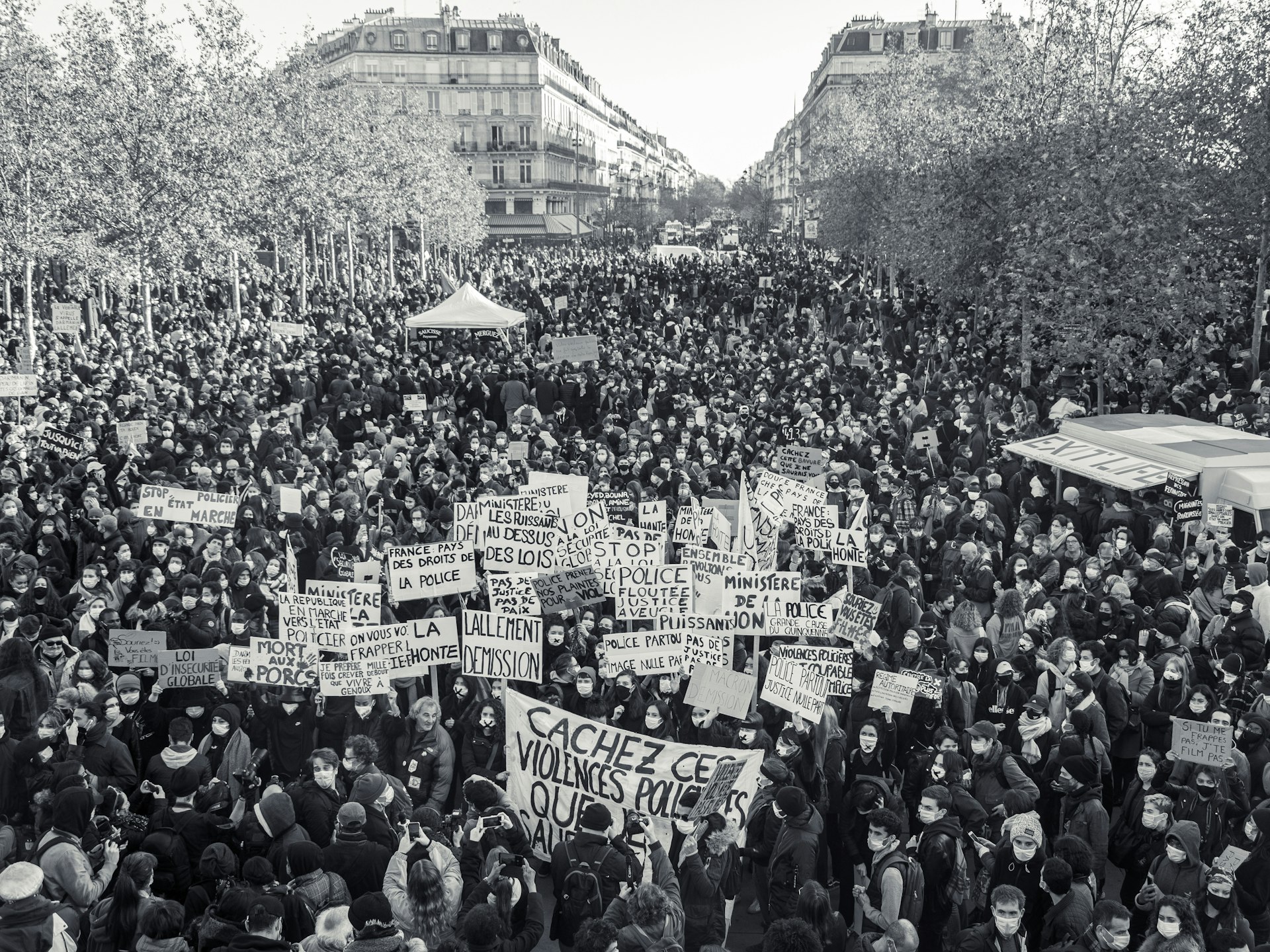

Photo by Koshu Kunii on Unsplash
Ancient Foundations of Human Rights Concepts
The origins of human rights ideas can be traced back to ancient civilizations, where early notions of dignity and justice laid groundwork for later developments. In 539 BC, Cyrus the Great of Persia conquered Babylon and issued the Cyrus Cylinder, often regarded as an early human rights charter for promoting religious freedom and abolishing slavery. [1] This artifact demonstrated a ruler’s commitment to basic protections, influencing philosophical thought across eras. During the 3rd century BC, Stoic philosophers like Cicero emphasized natural law and equality among humans, arguing that all people possess inherent dignity regardless of status. [2] These ideas persisted into the medieval period, where the 13th century saw the Magna Carta in 1215, which introduced concepts of limited government power and people’s representation through barons challenging King John’s authority. [2]
Expanding on these foundations, the Renaissance humanism in the early modern period further solidified human rights precursors by focusing on individual worth and rational inquiry. This shift challenged feudal hierarchies and set the stage for Enlightenment thinkers. Real-world examples include the Virginia Declaration of Rights in 1776, which enumerated fundamental freedoms like speech and religion, directly influencing the U.S. Bill of Rights. [3] Challenges arose from enforcement gaps, as these documents often excluded women, enslaved people, and indigenous groups, prompting later movements to address exclusions. Alternatives involved grassroots petitions and philosophical debates, fostering gradual societal shifts toward broader inclusivity.
Enlightenment and Revolutionary Advances
The 18th century marked a revolutionary leap with the American and French Revolutions embedding human rights into political frameworks. The U.S. Declaration of Independence in 1776 proclaimed ‘life, liberty, and the pursuit of happiness’ as unalienable rights, while France’s 1789 Declaration of the Rights of Man and of the Citizen asserted liberty, property, security, and resistance to oppression. [3] These documents transformed abstract ideals into actionable demands, inspiring global independence movements. For instance, they influenced Latin American liberators like Simón BolÃvar in the early 19th century.
Practical implementation involved constitutional assemblies debating clauses amid opposition from monarchists. Key steps included public assemblies for ratification and judicial reviews to enforce provisions. Potential hurdles, such as elite resistance, were overcome through popular uprisings and alliances with intellectuals. Complementary approaches emerged in abolitionist campaigns, where figures like William Wilberforce in Britain pushed for ending the slave trade via parliamentary petitions, culminating in the 1833 Slavery Abolition Act. [3] These efforts highlight how revolutions not only declared rights but mobilized societies for change, with key takeaways emphasizing persistent advocacy against entrenched powers.
19th and Early 20th Century Developments: Wars and Labor Rights
The 19th century saw humanitarian law evolve through responses to warfare. Henry Dunant’s efforts after the Battle of Solferino led to the 1864 Geneva Convention, protecting wounded soldiers and establishing the International Red Cross. [3] This was expanded by the Lieber Code during the U.S. Civil War and Hague Conventions in 1899 and 1907, defining laws of war. [1] Post-World War I, the League of Nations addressed minority protections and created the International Labour Organization (ILO) in 1919 to safeguard workers’ rights, including health and safety. [1]
Women’s suffrage gained traction, with New Zealand granting women voting rights in 1893, followed by the Netherlands and Russia in 1917, the U.S. in 1920, and the UK in 1928. [2] Implementation steps involved organized campaigns like marches and petitions; challenges included violent opposition, countered by strategic litigation. Case studies, such as Emmeline Pankhurst’s militant tactics in Britain, illustrate persistence yielding legislative victories. Alternatives encompassed educational drives to shift public opinion, underscoring diverse strategies in advancing gender equality.
Post-World War II: Universal Declaration and Global Standards
World War II’s atrocities, including the Holocaust, catalyzed modern human rights frameworks. The 1945 UN Charter committed to fundamental freedoms, leading to the 1948 Universal Declaration of Human Rights (UDHR), drafted under Eleanor Roosevelt’s leadership with 30 articles on civil, political, economic, social, and cultural rights. [1] [4] The Geneva Conventions were updated in 1949 to protect civilians and prisoners. [3]
To engage with these standards, individuals can study the UDHR text available through UN resources and advocate via petitions. Challenges like state sovereignty were addressed through binding covenants in 1966. Historian Samuel Moyn notes human rights unified global justice efforts around 1968. [2] Practical applications include Amnesty International’s monitoring since 1961, providing models for local activism.
The U.S. Civil Rights Movement: 1945-1968
Post-WWII, President Truman responded to attacks on Black veterans by forming the President’s Committee on Civil Rights in 1946, leading to Executive Order 9981 desegregating the military in 1948. [5] The movement peaked from 1954-1968, targeting Jim Crow laws via nonviolent protests.
Key milestones: Brown v. Board of Education (1954) ended school segregation; [6] Rosa Parks’ 1955 arrest sparked the Montgomery Bus Boycott; Little Rock integration in 1957 required federal troops; Birmingham 1963 exposed brutality; the 1963 March on Washington featured MLK’s ‘I Have a Dream’ speech; Selma marches in 1965 led to the Voting Rights Act. [6] [7] Legislation like the 1964 Civil Rights Act banned discrimination. [7]
Participants faced violence but used media for leverage. Steps for similar advocacy: organize locally, partner with NGOs, lobby legislators. Challenges like arrests were met with legal funds from NAACP. Examples include MLK’s Nobel win in 1964. Broader impacts spurred UN’s 1965 Racial Discrimination Convention. [7]

Photo by ench on Unsplash
Later Movements and Contemporary Relevance
Post-1960s, movements expanded to feminism, LGBTQ+ rights, and anti-apartheid struggles. Soviet bloc dissidents and Western labor activism elevated human rights globally by the 1970s. [3] Today, challenges persist in digital privacy and climate justice, with organizations like Amnesty tracking violations.
To participate, research via libraries or official UN pages, join campaigns, or contact representatives. Alternatives include education drives. Key takeaways: sustained, inclusive efforts drive progress, as seen in ongoing equality fights.
References
[1] CoESPU (n.d.). Human Rights evolution, a brief history. [2] Amnesty International (n.d.). A brief history of human rights. [3] Wikipedia (2023). History of human rights. [4] University of Minnesota Human Rights Library (n.d.). A Short History of Human Rights. [5] Truman Library Institute (n.d.). Civil Rights Timeline. [6] Library of Congress (n.d.). The Civil Rights Movement. [7] USIDHR (n.d.). How did human rights come about? A Brief History Overtime.